01
Energy for living
Carbohydrates help fuel your body. Whole grains, fruit and pulses bring fibre and other nutrients to the table, too.
For the things you do every dayA little care, every day
Everyday food. Lasting nourishment. Discover how a varied, balanced diet supports your body — one meal at a time.
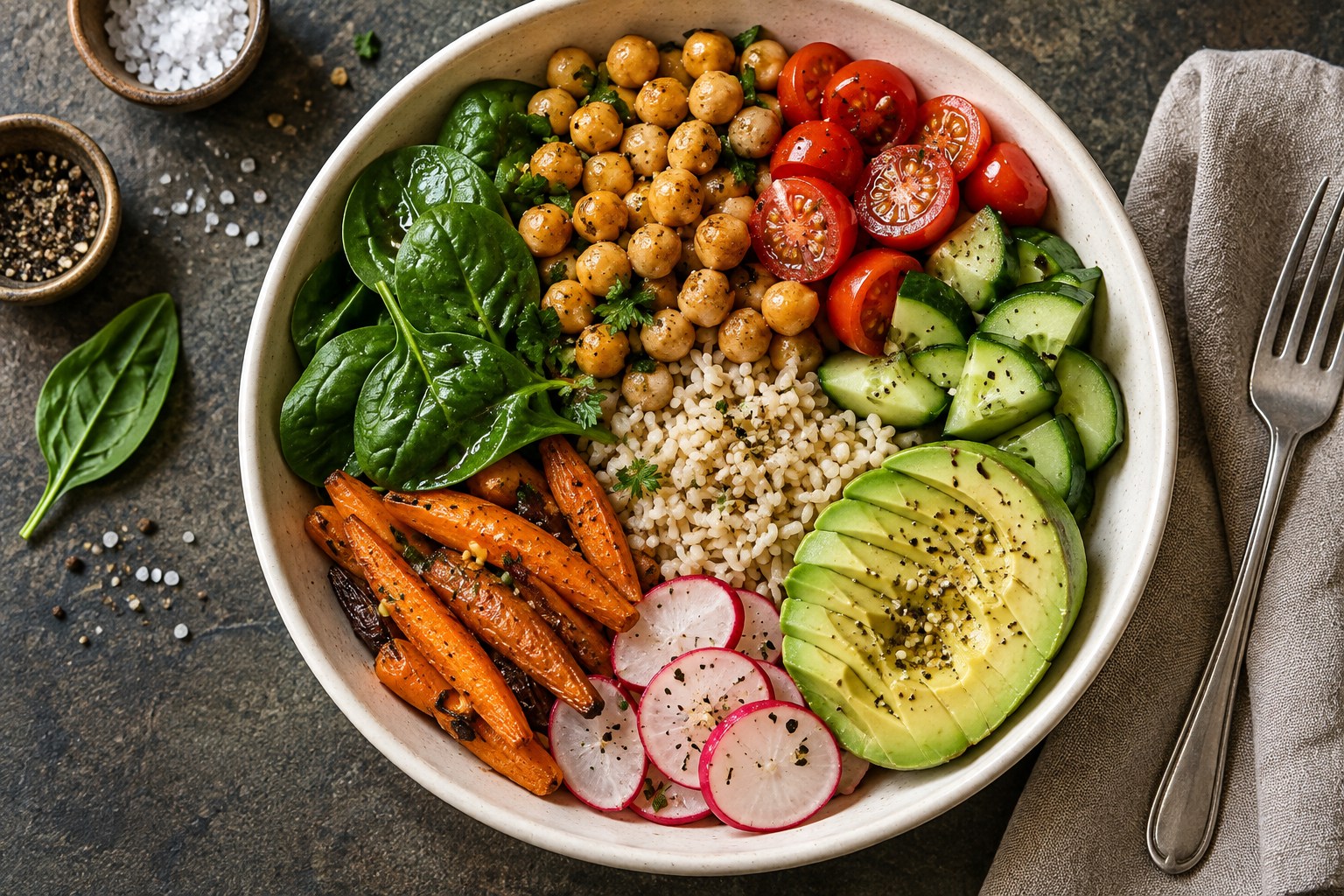
More varietyDifferent foods, different nutrients.
A little balanceMake room for every food group.
Everyday careBuild habits that work for you.
01 / The bigger picture
Your body uses the energy and nutrients in food every day. A varied diet helps give it what it needs.
Carbohydrates help fuel your body. Whole grains, fruit and pulses bring fibre and other nutrients to the table, too.
For the things you do every dayProtein provides building blocks for muscles and tissues. Vitamins and minerals support normal growth and the body's everyday functions.
A foundation for your bodyHealthy eating helps lower the risk of conditions such as heart disease and type 2 diabetes. Your overall pattern matters over time.
A habit worth growingLearn more: WHO · Healthy diet ↗
02 / Your everyday plate
Start with familiar ingredients. Bring different food groups together in a way that suits your taste, culture and budget.
Leafy greens, beans, millet, maize, seasonal fruit — everyday staples can be part of a varied diet.
Think about balance across the day or week. Every meal does not have to be perfect.
Enjoy a mix of vegetables and fruit. Fresh, frozen and canned options can all fit.
Leafy greens · carrots · mango · tomatoesChoose wholegrain or higher-fibre staples when you can.
Oats · brown rice · millet · wholegrain ugaliVary your protein foods through the week, including plant-based options.
Beans · lentils · eggs · fishInclude dairy or fortified alternatives, and small amounts of unsaturated oils. Make water a regular drink.
Plain yoghurt · fortified soya drink · vegetable oilExplore food groups: NHS · The Eatwell Guide ↗
03 / Small steps, often
Choose one idea that fits your day. Let it become familiar, then build from there.
Try a vegetable with lunch or a piece of seasonal fruit with breakfast.
Put a glass on your desk or take a reusable bottle when you go out.
Choose a few familiar ingredients before shopping. Keep beans or lentils in your cupboard.
Explore herbs, spices and lemon. Taste your food before adding more salt.
A few helpful answers
You do not need speciality products. Compare prices for seasonal produce, frozen vegetables, beans and local grains. Plan around what is available and affordable where you live.
Focus on your overall eating pattern. Foods high in salt, free sugars or saturated fat are best eaten less often and in smaller amounts. Enjoy variety rather than aiming for a perfect meal.
Needs differ with age, activity, pregnancy and health conditions. A qualified dietitian or healthcare professional can help you adapt your food choices if you have specific needs.
One meal is a good place to begin